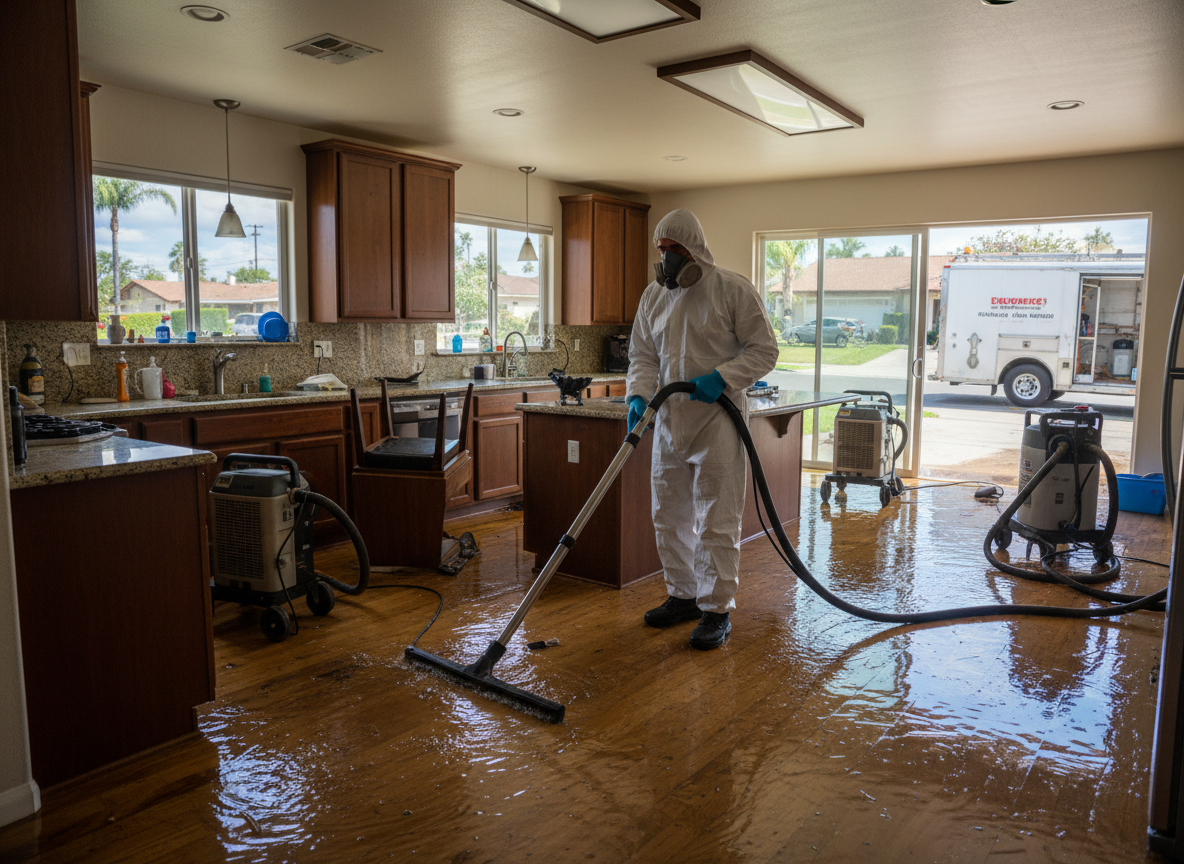
Granada Hills homes, many built in the 1950s and 1960s with stucco exteriors and slab foundations, face unique flood risks after winter rains soak the clay soils common near O'Melveny Park. Water migrates under slabs and into wall cavities, saturating insulation and baseboards that are difficult to access without removing sections of drywall. Mild winters keep temperatures above freezing but allow trapped moisture to linger, raising the chance of hidden mold growth behind cabinets and in subflooring before homeowners notice musty odors.
Extraction equipment must account for the flat terrain in Knollwood and the slight slopes toward Granada Hills Recreation Center, where runoff can pool against foundations during rare but intense downpours. Technicians often encounter older copper or galvanized plumbing that fails at joints after years of mineral buildup from Los Angeles County water. Removing carpet padding and hardwood in these homes requires checking for delamination, since particleboard underlayment swells quickly and must be cut out rather than dried in place.
After extraction, drying focuses on directing airflow under cabinets and into wall cavities using specialized injectors, because standard fans alone leave moisture in the dense plaster and lathe still found in many Granada Hills properties. Dehumidifiers run longer here than in newer Northridge builds because the original construction lacks vapor barriers. Final verification includes moisture meter readings on concrete slabs and behind baseboards to confirm levels match unaffected areas before any reconstruction begins.
Seasonal Considerations
Heavy winter rains combined with irrigation runoff from nearby Porter Ranch and Mission Hills properties can overwhelm older storm drains, pushing water into crawl spaces that many Granada Hills homes still have. Summer monsoons are rare but can cause flash flooding along Balboa Boulevard corridors when storm drains clog with debris from O'Melveny Park trails.
Technician insight
In Granada Hills, the thing that catches most people out with Flood restoration services is how the clay soil around O'Melveny Park keeps pulling moisture back into slab edges weeks after the initial event, especially in homes built before vapor barriers became standard.
Slab Leak Flooding in Knollwood Residence
A homeowner in Knollwood noticed water seeping along baseboards after a mild winter rain. Meters revealed moisture had traveled under the 1960s slab from a hairline pipe crack. Crews extracted water, injected drying air into wall cavities, and confirmed clearance readings before any new flooring was installed.
How it works
- 1
Initial Assessment
Technicians arrive within hours, document visible water lines, and use meters to map moisture in slabs, walls, and subfloors of the affected Granada Hills property.
- 2
Water Extraction
Industrial pumps and wands remove standing water from floors and cavities while protecting undamaged sections common in 1950s stucco construction.
- 3
Drying and Monitoring
Air movers, dehumidifiers, and wall injectors run until readings stabilize, with daily checks to adjust equipment placement around older plumbing routes.
- 4
Sanitization and Clearance
Antimicrobial treatment addresses contaminated water sources, followed by final moisture verification before any reconstruction work begins.
Pricing
Cost depends on water volume, affected square footage, and whether older materials like plaster or slab insulation require removal; upfront quotes provided after assessment.