Granada Hills homes built in the 1950s through 1970s often have stucco exteriors and slab foundations that trap moisture when leaks occur near O'Melveny Park or the Recreation Center. After heavy winter rains in the warm Mediterranean climate, water migrates under baseboards and into drywall, creating hidden mold colonies that standard drying misses. Proper remediation requires removing affected porous materials rather than surface treatments alone, especially in Knollwood where older HVAC systems can spread spores to adjacent rooms.
Los Angeles County building practices in this area frequently include enclosed attics and limited crawl spaces, which complicate airflow during drying. When water damage stems from roof penetrations common in hot summers, mold can establish on insulation and sheathing within days. Technicians must test moisture levels in multiple layers and use negative air machines to prevent cross-contamination to nearby homes in Northridge or Porter Ranch.
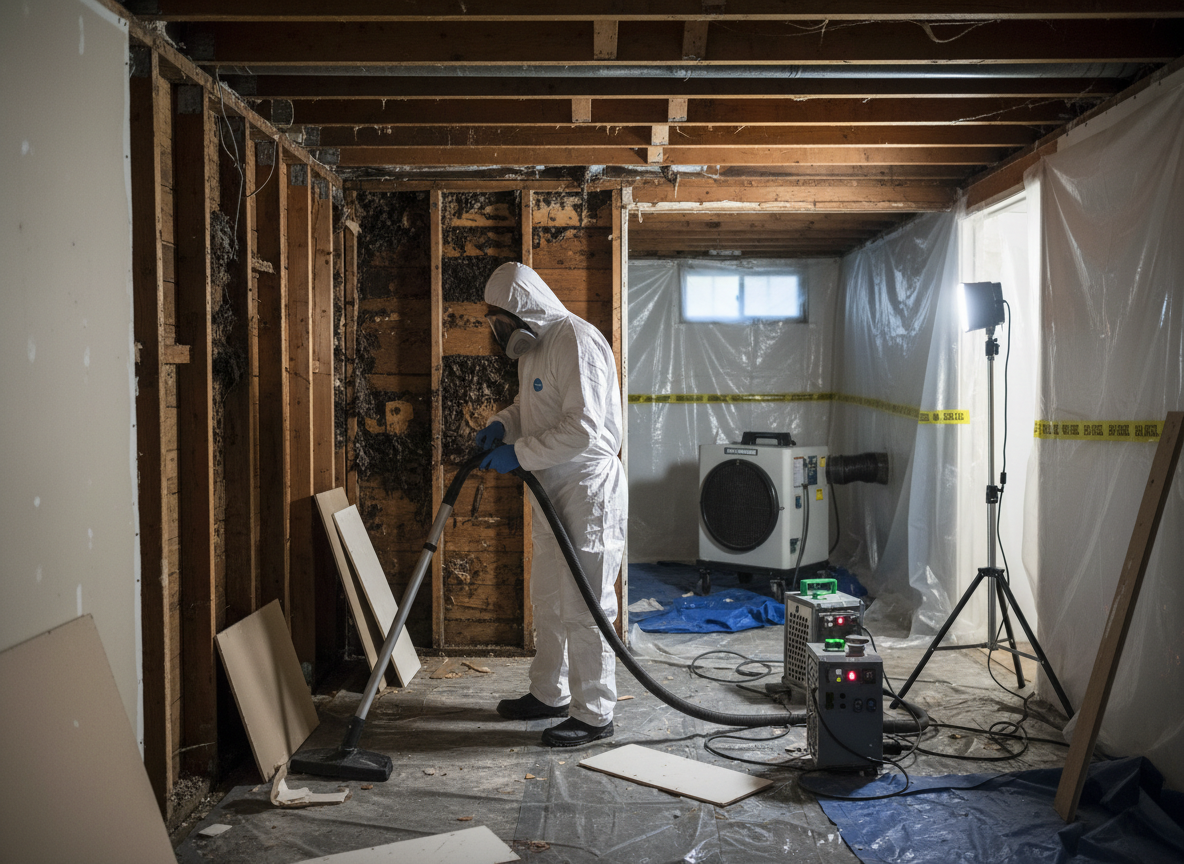
Mold remediation after water damage here also accounts for the mild winters that allow slow evaporation and prolonged humidity. Homeowners in Mission Hills sometimes delay action because visible signs appear minor, yet spores colonize behind cabinets and under flooring. Containment barriers, HEPA filtration, and post-remediation verification sampling are essential steps that protect both the structure and indoor air quality.
Technician insight
In Granada Hills, the thing that catches most people out with mold remediation after water damage is how slab leaks from the 1960s plumbing lines travel under the slab and resurface weeks later near interior walls. The mild winters keep soil moisture high around O'Melveny Park homes, so what looks like a small baseboard stain often means the entire bottom plate and subfloor need attention.
Hidden Mold Behind Kitchen Cabinets
A Knollwood homeowner noticed a musty smell after a slow pipe leak under the sink. We found elevated moisture readings extending into the adjacent wall cavity and under the vinyl flooring. Containment was erected, affected drywall and particleboard cabinet bases were removed, and the area was dried and treated. Clearance testing confirmed safe spore levels before new materials were installed.
How it works
- 1
Initial Assessment
Inspect affected zones in Granada Hills homes, identify water source, and map moisture migration using meters.
- 2
Containment Setup
Install plastic barriers and negative air machines to isolate the work area from the rest of the property.
- 3
Material Removal
Cut out and dispose of mold-impacted drywall, insulation, and baseboards while protecting unaffected areas.
- 4
Cleaning and Drying
Apply antimicrobial agents to remaining surfaces and run industrial dehumidifiers until moisture readings normalize.
- 5
Verification and Clearance
Perform air and surface sampling, then document results before reconstruction begins.
Pricing
Cost depends on the square footage affected, depth of material removal required, and whether hidden mold is discovered behind cabinets or under flooring.