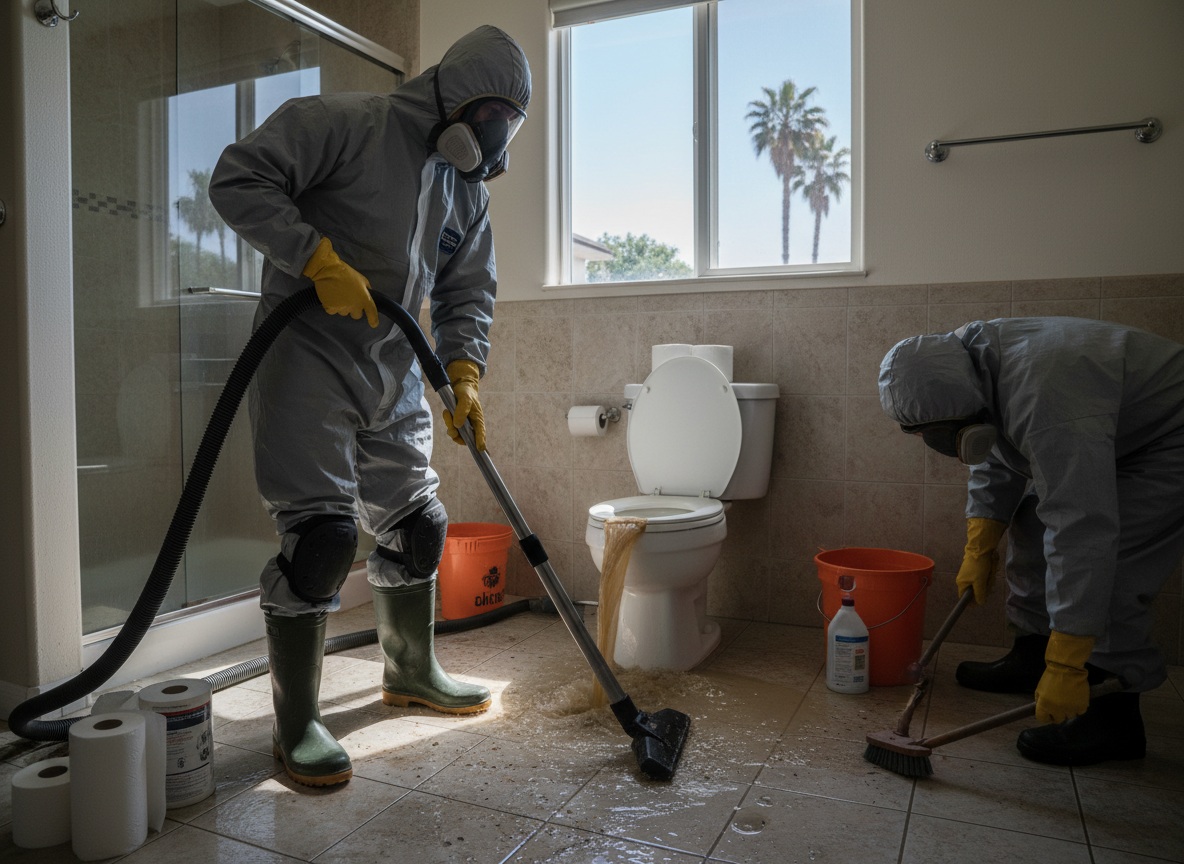
Toilet overflows in Granada Hills often start in homes built before the 1980s that still have original cast-iron or galvanized lines running under slab foundations common in the Knollwood section. Warm Mediterranean summers push indoor humidity high enough that moisture from a single overflow can wick into drywall and subfloors within hours, especially when the overflow reaches carpet or hardwood near the Granada Hills Recreation Center. Technicians must pull baseboards early and use moisture meters on both sides of interior walls because Los Angeles County code now requires documented drying logs before any finish work can begin.
Porter Ranch and Mission Hills properties share similar terrain slopes that send overflow water toward lower bedrooms or garages, a pattern less common in flatter Northridge blocks. In these cases, crews set containment barriers first, then extract standing water with truck-mounted units before hidden pockets form under cabinets. Mild winters keep soil moisture elevated year-round, so any water that reaches the exterior foundation can migrate back indoors through small cracks, turning a one-room cleanup into a multi-room job if the source is not isolated immediately.
Edge cases include overflows that reach tile grout in bathrooms added during 1990s remodels; the grout can hold water against the slab for days unless infrared imaging confirms full drying. Homeowners sometimes attempt to blot the spill themselves, pushing contaminated water deeper into base layers and raising the risk of bacterial growth that requires antimicrobial treatment before any reconstruction.
Technician insight
In Granada Hills the thing that catches most people out with toilet overflow cleanup is older slab plumbing in Knollwood homes; a small leak that stayed hidden through mild winters suddenly saturates the particleboard underlayment once the toilet backs up, and homeowners who mop only the surface end up with hidden mold weeks later.
Overflow into hallway carpet
A homeowner in Granada Hills near O'Melveny Park discovered water spreading from the guest bath into the hallway after a toilet overflow. Extraction revealed saturation under the carpet pad and into the base of two bedroom walls. Crews removed the pad, dried the slab with targeted equipment, and treated the framing; the home was cleared for new flooring within five days.
How it works
- 1
Initial Assessment
Technician arrives within the hour, locates the overflow source, and maps water migration through Granada Hills flooring and walls.
- 2
Water Extraction
Standing water is removed with portable and truck-mounted equipment while protecting unaffected areas in the home.
- 3
Drying and Monitoring
Air movers and dehumidifiers are placed; moisture readings are logged daily until levels match unaffected materials.
- 4
Sanitization
EPA-registered antimicrobials are applied to all contacted surfaces to address bacteria from the overflow.
- 5
Final Verification
Final meter readings and photos document dry conditions before any reconstruction planning begins.
Pricing
Cost depends on square footage affected, depth of water into subfloors, and whether contents require separate handling; upfront quotes provided after inspection.